Versioning
Versioning is key to ensure compatibility between Langfuse Server, SDKs, and custom integrations via the Public API. Thus, we take semantic versioning seriously.
For an overview of current and legacy versions, the SDK ↔ server compatibility matrix, and API version availability, see Versions & Compatibility. Removal dates for deprecated features are noted in the feature availability matrix there.
Scope of semantic versioning
The following changes result in a major version bump as they are considered breaking:
- Infrastructure changes
- Removal of existing Public APIs or removal/changes of existing parameters from Public APIs
The following changes do not result in a major version bump as they are considered internal implementation details:
- Database schemas
- Frontend APIs
Compatibility between Langfuse Server and SDKs
Langfuse Server and SDKs are versioned independently to allow for more flexibility in upgrading components. The compatibility rule: each server major version aims to support the current and the previous SDK major version of each language, and each SDK major requires a minimum server version. We try extremely hard to uphold this rule, but the v4 transition is an exception: it ends support for older SDK majors on a published schedule (see the feature availability matrix).
- Server: Can be upgraded independently of SDK versions within the supported range. Major server upgrades can drop support for old SDK majors; check the feature availability matrix and the upgrade guide before upgrading.
- SDKs: Older SDK majors keep working on newer servers until they are deprecated and removed (see the feature availability matrix). New SDK majors require the minimum server versions listed in the compatibility overview.
We recommend keeping the Langfuse Server up to date to ensure access to all features and security updates.
How Langfuse Cloud is versioned
Langfuse Cloud deploys continuously and always runs the latest Langfuse version. New capabilities are battle-tested on Langfuse Cloud before they ship in a self-hosted release, so Cloud can run ahead of the latest self-hosted version, and some features may be enabled on Cloud before they are available self-hosted.
Consequences:
- On Cloud, server versions are managed for you; only SDK versions and API endpoints matter.
- Breaking removals on Cloud are announced with a migration window and happen on published dates; on self-hosted they only happen in major releases. Both are tracked in the feature availability matrix.
Release Notes
Release notes are published on GitHub:
You can watch the GitHub releases to get notified about new releases:
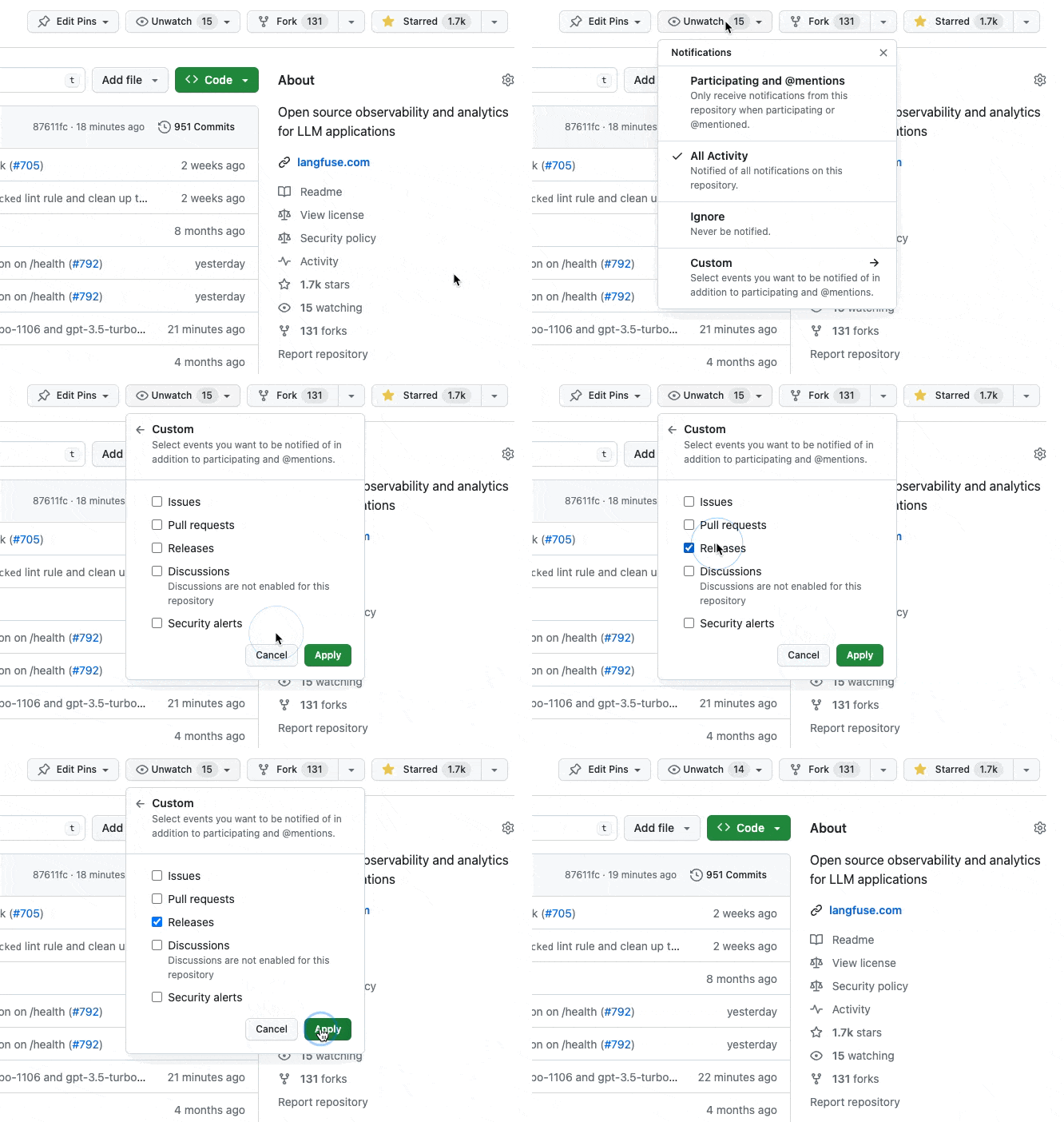
Also, you can subscribe to our mailing list to get notified about new releases and new major versions:
If you experience any issues when self-hosting Langfuse, please:
- Check out Troubleshooting & FAQ page.
- Use Ask AI to get instant answers to your questions.
- Ask the maintainers on GitHub Discussions.
- Create a bug report or feature request on GitHub.
Enterprise-grade support is available when self-hosting Langfuse. Learn more on our pricing page.
Last edited

